Americanization

Lately I’ve been reading Ian Rankin’s Inspector Rebus series.  I’ve especially enjoyed the reprints of some of the older books, as they kept the original language and spelling (even with the occasionally inscrutable Scottish phrase).  It really came home to me as I was reading Fleshmarket Alley and realized that it had been completely Americanized (including the title; it was originally published as Fleshmarket Close, “close” being a Scottish term for an alley).  After learning the correct spelling for Scotch Whisky, it’s especially jarring to see it repeatedly spelled as “whiskey.”  (And, given the proclivities of Inspector Rebus, it’s used quite often.)  If I’d given it any thought when ordering, I’d have gone out of my way to find the original (which appears to be available through Amazon marketplace, but not Amazon.com/US directly).

In the past I’ve even gone so far as to order directly from Amazon UK to get original editions.  It’s a bit more expensive, given the international shipping and exchange rates.  But, especially for new releases, it’s the only way to get an unadulterated version.

Katrina Symbology

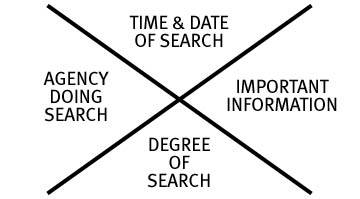
It’s kind of strange, but some people have adopted the big search-and-rescue X as some sort of symbol for Katrina.

When Freddy Yoder returned to his flooded Lakeview home after Hurricane Katrina, he was taken aback by the big orange “X” spray-painted on the plywood covering his front door. There was a notation in each quadrant, indicating the date searched, by which agency, whether the house was entered, and whether any corpses were found.

It was the first thing to go into the debris pile.

“I want to get rid of everything that reminds me of the storm,” he said recently as he stood in front of his restored Victorian-style home. “I’ve seen enough of that to last me a lifetime. … It’s permanently embedded in my mind, and I’ll take it to the grave with me.”

To most, the crude, neon-colored X’s are too-vivid symbols of death and destruction. The sooner they’re erased, painted over or discarded, the better.

But to some, like Bywater glass artist Mitchell Gaudet, the disaster graffiti is part of the city’s historical landscape. And preserving it has become an act of defiance.

“It was like a stigmata,” says the third-generation New Orleanian, whose girlfriend has re-created the fading yellow glyphs beside the front door of his antebellum home in raised, black, torch-cut plate steel. “Like a little badge of your survival.”

I think maybe people are thinking too much, but there’s no accounting for the strange things people do.

For those that are curious, here’s the definition of what goes in each quadrant:

Library: Remixed

I attended the town hall meeting last night to hear the proposals for expanding the library and to hear what people had to say.

There was some back-and-forth concerning using school libraries, and I can understand the viewpoint, as we pay large sums of money for our schools, and it seems like such a waste to have so much duplication.  I really have no opinion on the topic, though, other than that I expect that there would be problems trying to come up with the optimum mix of materials for each school library in order to serve the entire population without significant duplication.  That’s one area where a single, municipal library certainly has advantages.  The comment by the lady who home schools, though, did get me to thinking that there might be cause to force the schools to open their libraries to home schoolers, since despite not sending their children to the school have to still pay school taxes.  But that’s a rant for a different time.

The only two comments that had me gritting my teeth came from Julie Tandy and Gene Stockton.  First, Ms. Tandy kept referring to an “anti-library” campaign, which I find at best to be disingenuous.  Mr. Stockton somehow found it necessary to insert a reference to a “full build out library in Town Center” in his remarks, which was annoying, in that I’d hoped that we’d finally driven a stake into the heart of the Town Center foolishment.  Anyhow, Mr. Stockton’s remarks seemed to egg on the fellow who came later who said he’d vote against ANY proposal that wasn’t in Town Center.  So much for killing that particular beast, I guess…

Before I get into my thoughts on the current proposals, I suppose that I need to review my reasons for voting against the last proposal (although it’s been covered in detail previously):

  • Town Center: Bad parking, bad traffic logistics in general
  • Insufficient footprint space at Town Center seemed to be driving an unnecessary second floor, which increases costs and decreases staff effectiveness.  Experts suggest libraries should not be two stories until they reach 50,000 to 60,000 sq ft.
  • Critical infrastructure items (roads, fire stations, etc) not funded or committed by council at the time.
  • Concerns about the tax rate in relation to the unfunded/uncommitted items mentioned previously.

So, now that I’ve got that out of the way, some thoughts on the presentation.  I liked the general ideas that were being put forth, although I would have liked to have seen more specifics with regards to the layouts of the expansion plans.  If we can afford it, I’d like to see the full expansion to 37,500 sq. ft.  If we’re going to go through the trouble to upgrade the existing library (and it’s going to be a hassle while it’s happening), it seems best to go ahead and expand it to the maximum.  Although I might temper it a bit by holding back on the expansion of the collection and the automation until it’s required (unfortunately, though, these are still only a small part of the overall costs for the expansion). 

Given the above, it just leaves the question of what the city can afford.  Kevin Lahner gave us some information about how the library bond costs would impact the debt burden and the tax rate, and it would appear that we could absorb if it were just the library that had to be funded.  However, as I understand it, we will need one more fire station beyond the new one being planned for Hidden Lakes.  Also, the recent flooding has increased the priority on some significant infrastructure issues.  All of this will require significant expenditures both near and long term.  Which translates into tax rates and debt burdens.

Now one of the other things that bugged me about the last proposal was that I got the impression that people were selling us a bill of goods when they said the new library wouldn’t affect the tax rate.  Perhaps it wouldn’t, if you just considered the library.  But you can’t view the library in a vacuum.  And, from my point of view, it was this disingenuous spin over the tax rate that was worse that simply coming out and saying taxes would increase.  While I may be pretty wary of increasing taxes, I will at least consider it as an option if it’s necessary.  So, ultimately, I think the library supporters hurt themselves more by trying to steer around the issue than if they’d confronted it head on.

I’d like to see some detailed analysis done of the various options (infrastructure AND library options) showing the overall effect on debt burden and the tax rate.  Perhaps people would still choose an expanded library, even if it raised taxes, if they thought that the required items were being handled first.  I can’t answer 100% that I’d support library expansion right now, since I don’t have the kinds of numbers I’d like to see.  But I’d be willing to give a proposal serious attention, even if it raised taxes, provided it addressed my concerns.

Update:  I see that Jim Carson has taken a stab at estimating the city’s debt burden after needed capital improvements.  It doesn’t include the new drainage issues, nor does it include the library, but it’s still informative.  The drainage issues and library would be in addition to the numbers he shows, which is kind of scary, as he’s already showing payments on $50M in new debt.

Truth In Labeling

I updated the picture since the old one was taken about three years ago. 

Yeah, I’ve been letting my hair grow out.  This picture is from March or April, so it’s grown even more since then. 

So far, no long-hair hippy comments. 

Library Response Percolating

I have some comments and thoughts about last night’s library town hall meeting.  I’ve got a post brewing, but it might be late in the day, as I’ve been stealing moments during the five hours of conference calls that are on my calendar for today.

Incredibly Rude Machine

It’s bad enough when you call a company and end up having to speak to a damn machine.  But having a machine call me and demand that I speak to it is beyond the pale.  I picked up a call late last week and was immediately greeted by a computer-generated voice that said, “Is this Aubrey Turner or spouse?  Please say ‘Yes’ or ‘No’.”  My immediate response was, “Hell, NO!  I’m not talking to a damn machine!” after which I hung up.  I looked up the number later and it turned out to be from my insurance company’s “informed health line” (basically a library of health information).

When I got home last night there was a message on my machine from the insurance company’s computer again.  Since I didn’t have the opportunity hang up it got around to mentioning what it wanted, which was for me to participate in a survey. 

So, here’s a note to Aetna:  I don’t participate in surveys, so don’t bother calling again.  Regardless, though, if you have need to call me, please have the common decency to have a human on the line.  I am not going to talk to your damn machine.

Great Leaping Lizards!

Somewhere in the vicinity of 6:15 this A.M. I stumbled to the back door to let Boots out for her morning sojourn in the back yard.  Just as I opened the door one of those pink geckos that we get around here darted across my foot and into the living room and behind the TV and entertainment center.  He’d been lying in wait, ready to ambush whomever opened the door and make a break for the inside.

When I was living in Denton they used to get inside somehow.  I learned that they like to hang out in the bathroom for some reason (perhaps the humidity?).  In particular, they liked to hide behind the toilet, waiting to scare the bejeebus out of the unwary.  While this one made for the TV this morning, I now suspect that I’ll find him in one or other of the bathrooms at some point.

This should make things more interesting over the next day or two until I can find the little bugger.  It’ll make every bathroom break an opportunity for a tactical room clearing exercise.  ohh

Lost and Found Dept: SanDisk Memory Stick PRO Duo

I recently found a florescent green 1.0GB SanDisk Memory Stick PRO Duo card.  It was in the grass next to the Bear Creek walking trail just west of the Rufe Snow bridge. 

From rummaging about its contents, I have determined the following:

  • It contains a number of pictures and videos.
  • It appears to have been used in a Sony W810i “Walkman” Phone (which also suggests the user is with AT&T/Cingular).
  • The user is either named Megan or knows someone named Megan who turned 17 in June (based on the photo of someone’s birthday cake).
  • The user may have attended a concert by “The Fray” on or about 7/12/2007 (judging by the audio and video recordings).

I realize this it’s a long shot, but perhaps some of my Keller readers might recognize this young lady (who I believe is the owner of the phone):

According to the picture’s metadata, the above was taken on 6/22/2007 at 5:06pm using the W810i.

If you know the owner of the card, hit the “Contact” link at the top of the page to let me know.  I will make arrangements for its return.

You Must Smile For The Camera!

There were a surprisingly high number of bank robberies in the area last year (and the trend seems to be continuing this year):

Last year, Dallas police reached a 15-year high for the number of bank robberies they investigated.

In an effort to avoid breaking that record anytime soon, officers plan to visit banks robbed recently to discuss ways to deter criminals. Police hope a better partnership with banks will help hold the numbers down.

So, just what are the police advising?

Some of the measures Dallas police will encourage banks to take:

  • Put up signs asking customers to remove hats, sunglasses and other items that hinder identification.
  • Place height-markers at entrances and exits to help identify suspects.
  • Update camera and alarm systems.
  • Place an employee near the door to greet customers.
  • Educate employees on how to spot potential trouble and report it quickly.
  • Make sure employees’ views of the teller area are unobstructed by desks, banners or other items.

Most of it sounds fairly innocuous, except for that first one.  Now I realize that banks are private property (or as private as property gets these days, what with the meddling health nazis, etc).  But something about this still rubs me the wrong way and it feels like the edge of a slippery slope.  Of course the police say it’s “voluntary,” but as with everything of this ilk, what is voluntary today soon becomes mandatory tomorrow.  There has been a time or two where I’ve nipped into the Chase branch in Town Center while I’m out walking, and if it’s particularly hot or sunny I wear a hat to cut the glare.  I’d be a bit miffed if told to take off the hat, because by then I’ve got sweaty hat head. 

Rather than concern about annoying regular customers, the primary reason that some banks haven’t implemented the hat suggestion is fear of offending people who wear head scarves or turbans, though.  Ah.  Finally something that multiculturalism is good for.

Anyhow, should this catch on with banks, I guess I’ll just have to drive over to the bank from now on (or perhaps frequent the drive-up window more often), thereby emitting more Gaia-destroying carbon-laden greenhouse gases.  cool smirk

Do Not Question The System, Tovarich!

Sometime early next year the state plans to fully deploy a system for checking the validity of insurance cards.  The data will be available to police when they run a license-plate check.

Under the system, insurance information will pop up on the in-car computers of police officers when they check license-plate numbers. The state will pay for the $3.5 million-per-year system through a $1 fee on vehicle registrations. Motorists will still be required to carry their insurance card.

The first thing that came to my mind is that some poor schmucks are going to get hurt badly by this if they happen to be unlucky enough to be the victim of poor data in the system, especially in those jurisdictions where they impound your vehicle on the spot for failing to have insurance.  It appears I’m not alone, because it’s happened already in other states.

“The system has many flaws in other states where [it] has been enacted. Motorists with valid insurance have been pulled over, fined, or sometime had their cars impounded because the [correct] data does not match what the state has” in the database.

—Sandra Helin, spokeswoman for the Southwestern Insurance Information Service, an industry group

The state claims that there will be a “data clean-up phase” conducted before the system will go online.  But it doesn’t inspire confidence that the system provides no way for you to verify your own data.  You just have to hope that your insurance company correctly spots any inconsistencies before it goes online.

What peeves me the most about these sorts of systems is that there is never any accountability for screw-ups.  The onus is put on the victim (guilty until proven innocent) to prove that the system was wrong.  And in some cases, they just don’t care.  I’m reminded of the case where a woman was issued two (duplicate) tickets by the City of Garland from a red-light camera because she ran a red light.  The only problem with the citation was that she ran the light because an officer was blocking it to let her pass.  She was driving in a funeral procession.  In fact, it was her own mother’s funeral.  It took multiple attempts to get in touch with anyone at the city who could help, and when they did find someone they demanded a copy of the obituary.  But once the obituary was sent, she couldn’t get any information out of the city as to whether the tickets were really dismissed.  Worried that perhaps these tickets might cause warrants to be issued for her, she finally called Saul Garza at Fox 4 News.  Interestingly enough, the city managed to dig up someone who was helpful once a reporter started digging.

I’d like to see some real penalties for the people running the system if they cause an innocent person to be fined or have their vehicle impounded.  A system like this, if it can result in any sort of penalty against a person must be as close to 100% accurate as possible.  There also have to be safeguards and checks-and-balances so that people aren’t bounced between the vendor and the state when they try to get answers.  The red light cameras have really brought these issues to light recently, with people being fined for crossing an imaginary stop line or for vehicles they don’t own.  Unfortunately, in most cases, when attempting to correct the problem the victim gets bounced between the camera vendor/operator and the city and no one will step up and own the problem.  Perhaps if the city, state, and/or vendor in these cases would have to pay a hefty fine for each uncorrected mistake, they’d be more inclined to take responsibility instead of pointing fingers.  It shouldn’t require calling an investigative reporter to get problems fixed.